I have tracked every dollar I have spent since 2020. Not with an app. With a Google Sheet I copied from my grandpa.
Since January 2021, it has also tracked this:
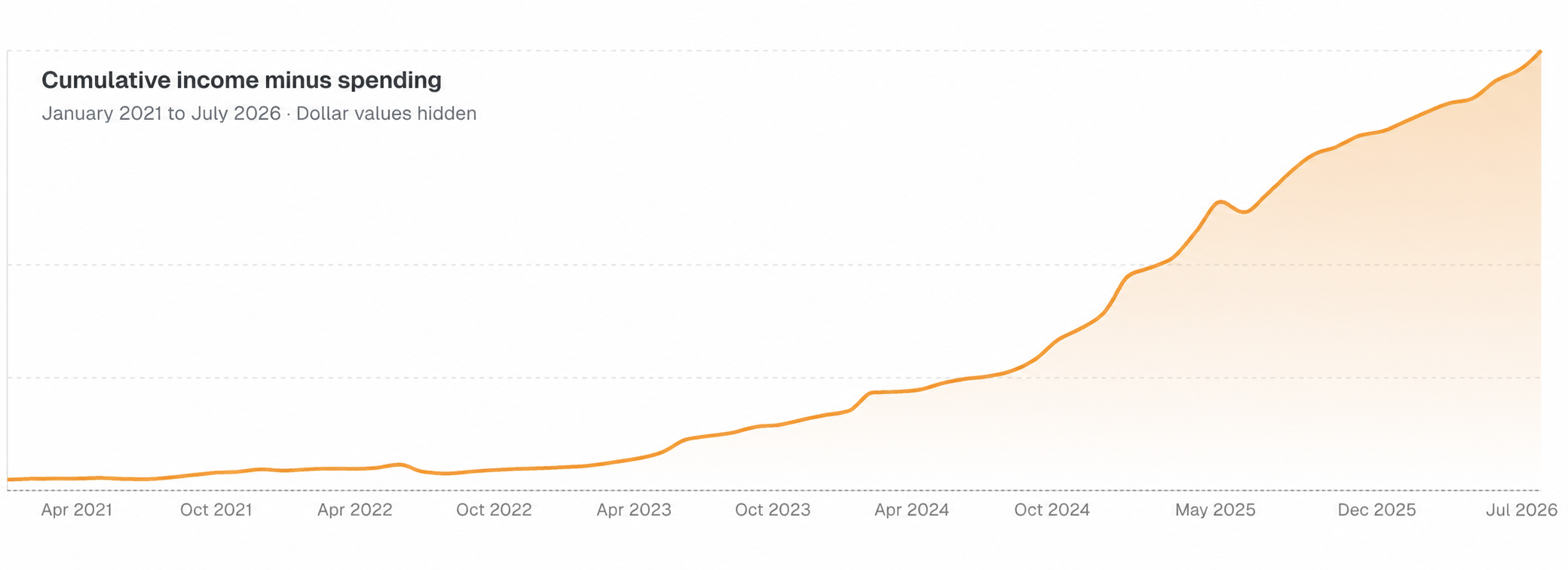
The line is cumulative income minus spending. It does not show my bank balance, net worth, or investment returns. Transfers between accounts are excluded. Money borrowed or lent is tracked separately. I started the chart in January 2021 because that was my first full year of standardized data.
A static balance tells you very little. What matters is the direction you are moving.
The line gets much steeper around 2024. Most of that came from higher income. Once it started rising faster, I wanted to see how far I could keep it going without letting my spending rise at the same rate.
The spreadsheet from my grandpa
My grandpa kept his finances in a local Excel file. It had dates, descriptions, categories, accounts, totals, and a lot of colored cells. It was not elegant, but it worked.
I found it interesting and wanted to use it myself. I imported the file into Google Sheets and gradually rebuilt it around my own life.
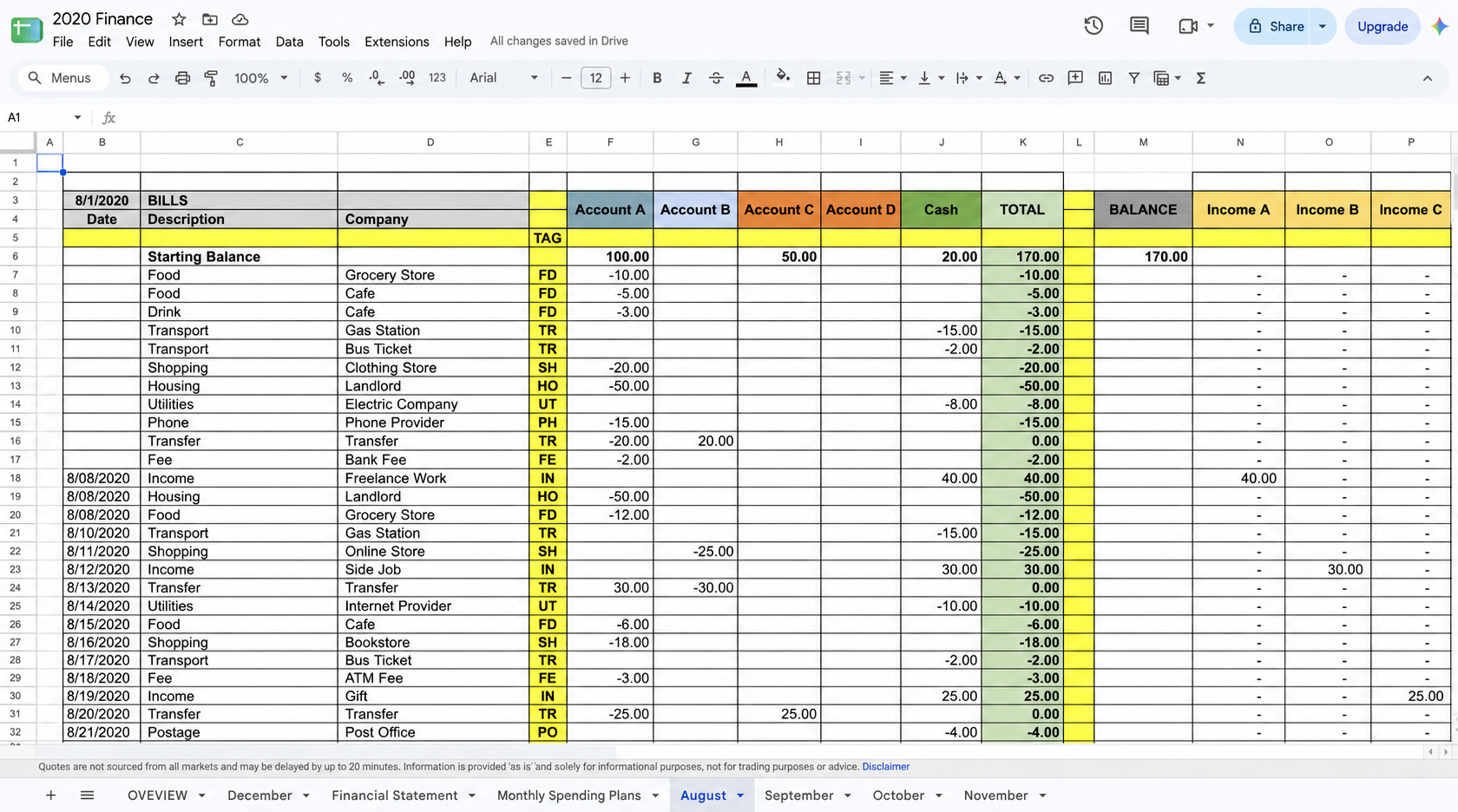
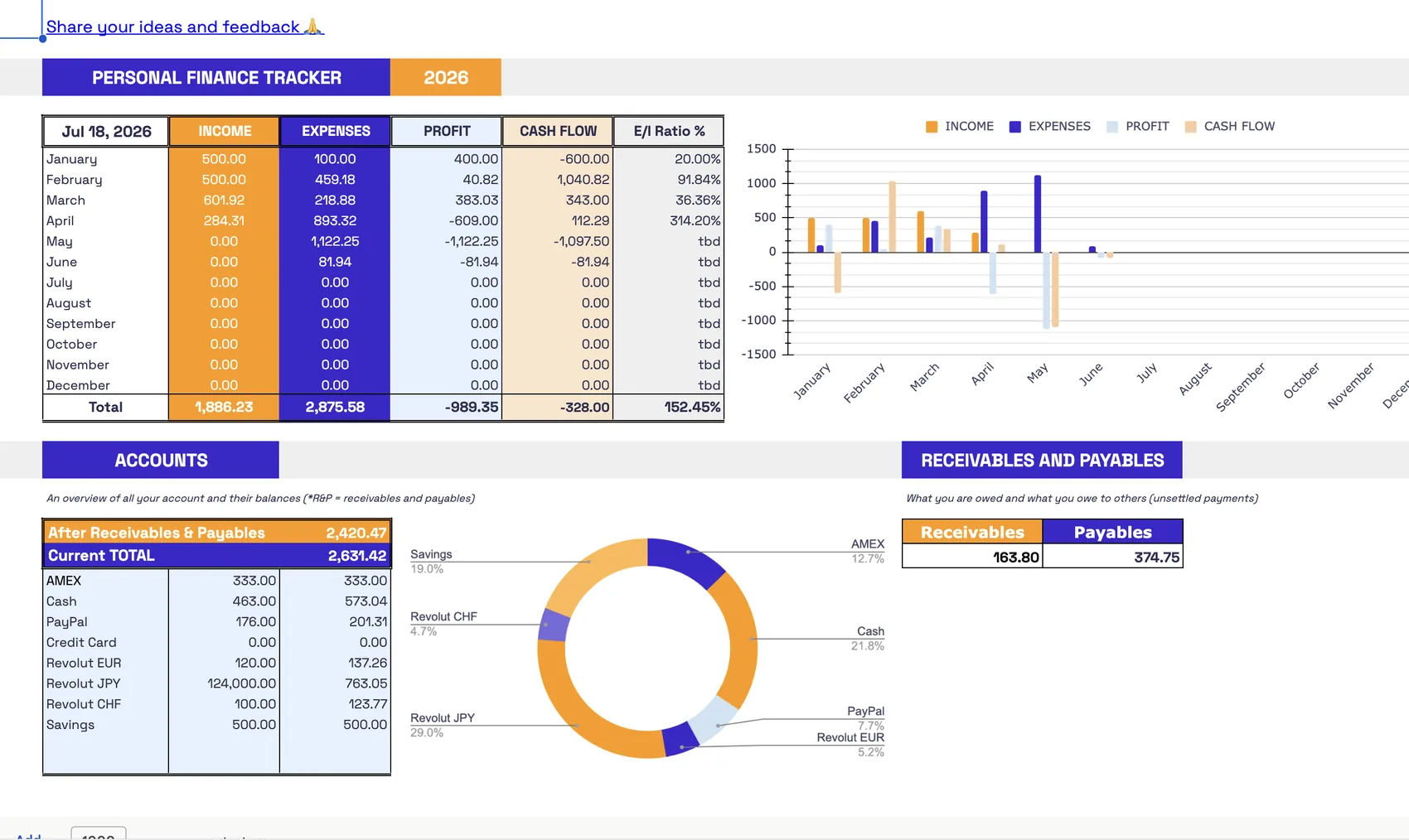
I cleaned up the columns and categories. Google Drive made the file available anywhere and kept it backed up. I added multicurrency support, clearer account handling, and better reports.
Why I still enter everything manually
Every week or two, my wife and I sit down and go through our transactions. It takes 15 to 30 minutes, depending on how much we spent and how long we waited.
We enter each expense and each source of income. Transfers have their own category, so moving money between accounts does not look like spending. Borrowing and lending are separated for the same reason. At the end of each year, we review where the money went and which categories drifted.
This is not an argument that automatic finance tracking is bad. Automation is less work, and I may use more of it later. For now, I still want the friction.
Typing a transaction forces me to look at it.
If everything appeared automatically, I would probably stop looking. The 15 to 30 minutes is the point.
One month, our restaurant total was clearly too high when we compared it with everything else. We deliberately changed our behavior and cut restaurant spending by roughly 50% the following month.
An automatic import would have recorded the same transactions. Manually entering them made us confront the total.
The feedback loop
I started checking the cumulative chart more often. If the line flattened, I wanted to know why. When it rose faster, I wanted to keep it going.
That was more useful to me than checking a bank balance.
The strangers in my spreadsheet
I first shared the sheet with friends and family. They liked it and shared it with their friends.
Then I started seeing anonymous viewers whenever I opened the shared Google Sheet. I did not know who they were, but people were clearly passing the link around.
On October 15, 2023, I posted the template to Reddit. I asked for feedback from other people who tracked their finances in spreadsheets, left the link in a comment, and forgot about the post.
The anonymous viewers kept appearing. About a year later, I checked the Reddit post again. It had passed 100,000 views.
My Reddit analytics now show 223,000 views.
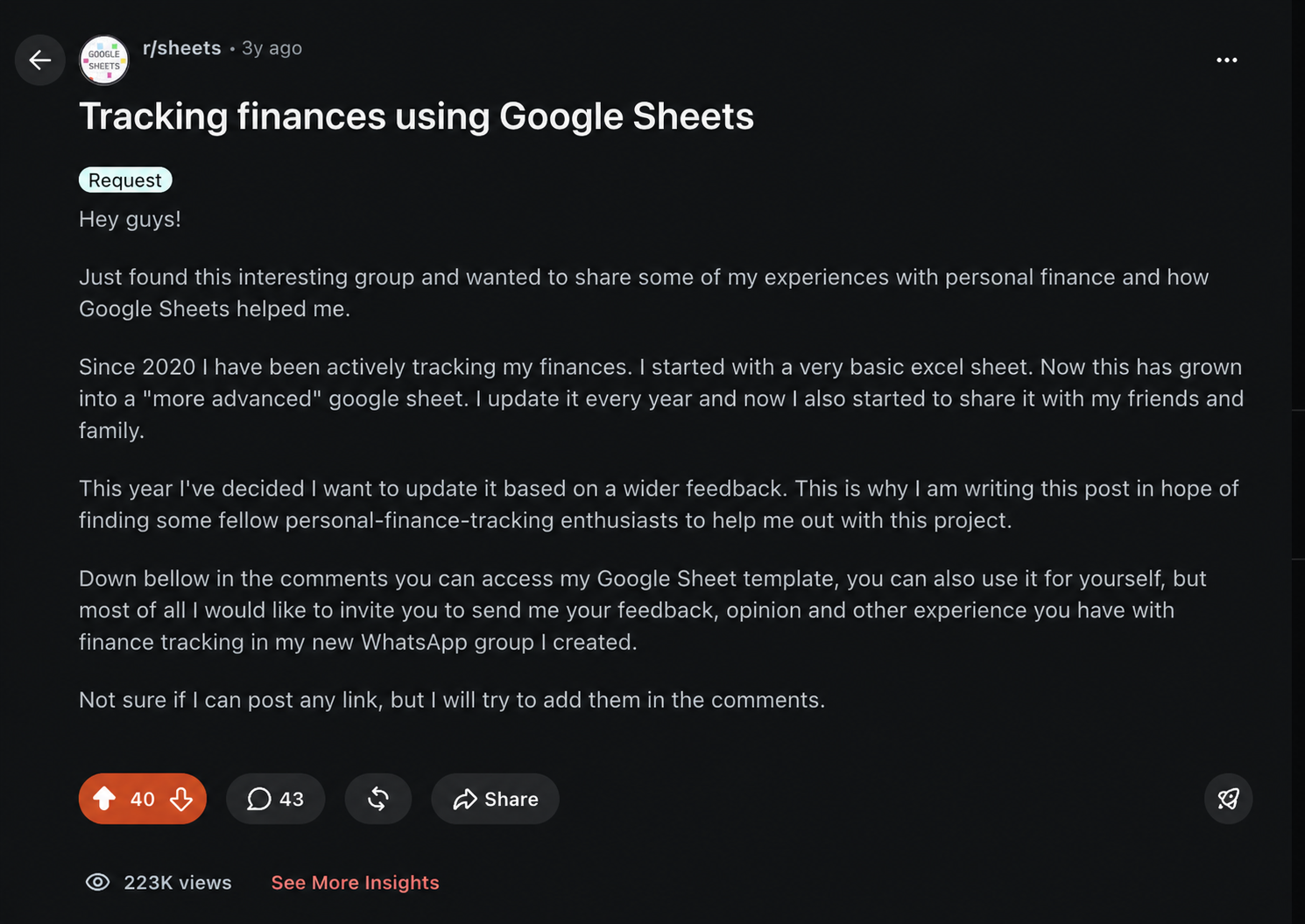
The comments gave me the same kind of feedback I had been getting from friends. People asked for year-over-year comparisons, subcategories, different colors, better credit-card handling, and new versions of the sheet.
From a shared link to a product
In March 2025, I built write-it-down.com. Instead of sharing one public Sheet, I asked for an email address and sent each person their own copy.
At first, the copies were free.
Later, a friend asked why I was not charging for it.
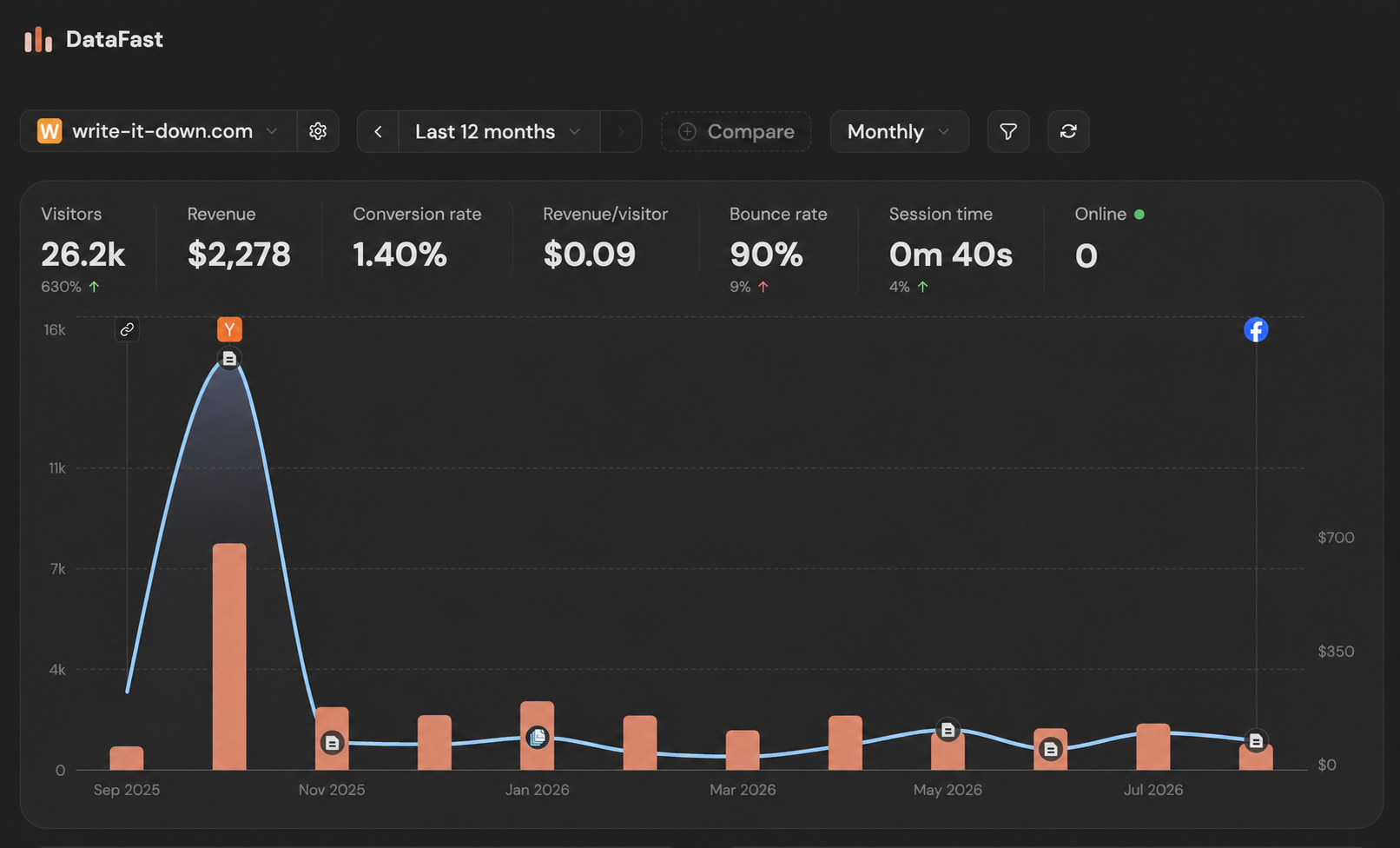
I added paid checkout in September 2025. As of August 2026, DataFast shows 26.2k visitors and $2,278 in revenue over the last 12 months.
I use DataFast to track traffic, conversions, payments, and revenue.
How it runs now
The entire purchase and delivery flow is:
There is no manual order fulfillment. Checkout and delivery run automatically.
Someone pays, and the sheet arrives in their inbox.
A Google Sheet is enough
I never turned it into a proper app. There was no reason to. My grandpa's spreadsheet already did what I needed: it made me write down what happened.
Over time, I added better structure, multicurrency support, reports, a website, payments, and automatic delivery. The sheet itself is still a sheet.
I still open it every week or two and enter transactions manually. Other people can buy a copy now, but I built it for myself and I still use it.
If you want to use the sheet, it is available at write-it-down.com.
Six years later, a Google Sheet is still enough.